
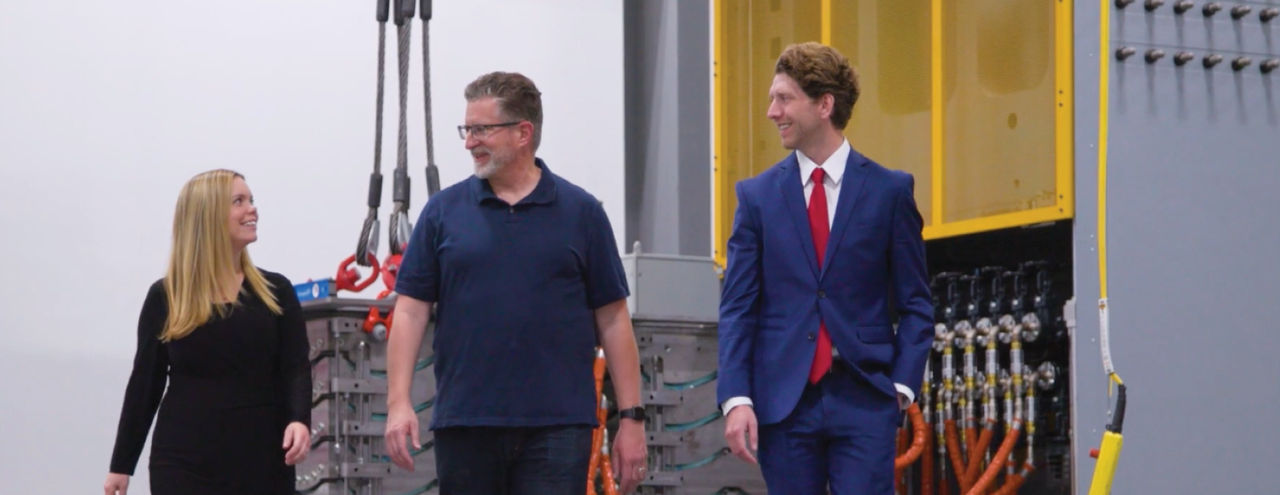


Artificial intelligence is becoming one of the most significant sources of investment and economic activity in the U.S. economy.
Cassidy pointed to record spending on processing equipment, software, and data center infrastructure as evidence that AI has become a major growth catalyst. The impact extends beyond technology companies, creating opportunities across construction, manufacturing, energy, transportation, and professional services.1
The scale of investment is substantial. McKinsey estimates that global spending on data center infrastructure could reach approximately $7 trillion by 2030 as organizations continue building the computing capacity needed to support AI applications. The buildout is creating significant demand for power, cooling, electrical infrastructure, equipment manufacturing, and construction services across the economy.2
The New Growth Drivers:
Key Takeaways from the 2026 U.S. Economic Forecast
First American recently hosted our 10th annual economic forecast webinar with Gerard Cassidy, Managing Director at RBC Capital Markets. While inflation, interest rates, federal deficits, and geopolitical developments continue to shape business conversations, Cassidy's outlook highlighted a U.S. economy that remains positioned for growth. At the same time, the drivers of that growth are evolving.
Many of the indicators that historically signaled a recession have failed to do so in the current cycle. Artificial intelligence, domestic manufacturing, consumer wealth, and labor market strength are supporting growth in ways that few economists could have predicted when interest rates began rising several years ago. Together, these forces are helping offset headwinds from inflation, elevated borrowing costs, and growing federal debt.
Drawing from Cassidy's analysis and recent economic data, here are five trends organizational leaders should be watching in the year ahead.
AI Investment Is Reshaping Capital Spending
Manufacturing Reshoring Gains Ground
The reshoring trend that emerged during the pandemic continues to reshape the manufacturing sector.
Cassidy noted that construction of manufacturing facilities remains well above pre-pandemic levels as companies invest in domestic production, diversify supply chains, and reduce dependence on overseas suppliers. While semiconductor fabrication plants and electric vehicle facilities receive much of the attention, investment has broadened across industries ranging from industrial materials to consumer products.1
This sustained capital investment has contributed to improved manufacturing activity and helped offset some of the economic drag typically associated with higher borrowing costs. For many organizations, supply chain resilience has become just as important as cost efficiency when making long-term investment decisions.
The Labor Market Continues to Support Growth
The labor market has cooled from the extraordinary conditions of the immediate post-pandemic period, but it remains a source of economic strength.
According to the Bureau of Labor Statistics, the U.S. had 7.6 million job openings in May 2026, while voluntary quits held at 3.1 million. Both figures suggest employers continue to hire and workers remain confident in their ability to find new opportunities.3
Cassidy also highlighted historically low unemployment claims and wage growth in the 3% to 4% range. Although hiring has become more measured, labor market conditions remain considerably stronger than those typically associated with an economic slowdown.1
For employers, this creates a different challenge than in recent years. Rather than relying on hiring to drive growth, organizations that combine workforce development with productivity-enhancing technologies will likely be best positioned as AI adoption continues to accelerate.
Strong Consumer Spending Holds Steady
Consumer spending remains the backbone of U.S. economic growth, accounting for roughly two-thirds of total economic activity.1
Cassidy pointed to healthy household balance sheets, manageable debt levels, and approximately $1.3 trillion in annual Social Security benefits as factors helping support spending. Even after several years of elevated inflation, many households remain financially stable relative to previous economic cycles.1
Household wealth has also remained near record levels. According to Federal Reserve data, household net worth exceeded $174 trillion in early 2026, supported by gains in housing and financial assets. Strong household wealth typically supports spending activity, providing an additional tailwind for economic growth.4
Long-Term Fiscal Risks Remain
While the near-term outlook remains constructive, several long-term challenges continue to warrant attention.
Cassidy identified inflation and federal deficits as two of the most significant issues facing policymakers. Although inflation has moderated from its post-pandemic peak, it remains above the Federal Reserve's long-term target. Meanwhile, persistent government deficits continue to add to the nation's debt burden.
Those concerns are reflected in the Congressional Budget Office's latest outlook. CBO projects a federal deficit of approximately $1.9 trillion in fiscal year 2026 and expects debt held by the public to continue rising over the next decade. The agency projects federal debt will reach roughly 120% of GDP by 2036 if current trends persist.5
Commercial real estate also remains uneven, particularly in urban office markets where vacancy rates continue to reflect changes in workplace behavior and office demand.
These challenges are unlikely to derail economic growth in the near term, but they remain important considerations for executives evaluating long-term investment, financing, and expansion strategies.
The U.S. economy continues to benefit from powerful growth drivers that are different from those seen in previous cycles. AI investment, manufacturing expansion, a healthy labor market, and strong consumer finances have helped sustain growth despite elevated rates and ongoing economic pressures. While inflation and fiscal challenges remain, the broader outlook points to continued expansion heading into 2027.
First American helps organizations navigate changing economic conditions through flexible financing solutions that support capital investment, technology adoption, and long-term growth. As businesses adapt to new opportunities and emerging challenges, access to capital remains an important competitive advantage.
Sources:
- Gerard Cassidy, 2026 U.S. Economic Forecast Webinar with First American, July 2026.
- McKinsey & Company, The $7 Trillion Data Center Build-Out: How Industrials Can Capture Their Share, March 2026.
- U.S. Bureau of Labor Statistics, Job Openings and Labor Turnover Survey (JOLTS): May 2026, June 2026.
- Federal Reserve Bank of St. Louis (FRED), Households; Net Worth, Level, updated June 2026.
- Congressional Budget Office, The Budget and Economic Outlook: 2026 to 2036, February 2026.
This article is for informational purposes only and is not intended to constitute legal, financial, or other professional advice. The accuracy of the information is not guaranteed and should not be regarded as a complete analysis of the topics discussed. No endorsement of any third parties or their advice, opinions, information, products, or services is implied by First American Equipment Finance or its affiliates.
Featured Speaker

Gerard Cassidy
Managing Director of Equity Research, RBC
Gerard Cassidy is a Managing Director of Equity Research with RBC Capital Markets. He is a former Director and Secretary of the New York Bank and Financial Analysts Association. Often quoted in The Wall Street Journal, The New York Times, Forbes, Business Week, The American Banker and other leading newspapers and periodicals, Cassidy also regularly appears on leading broadcasts discussing banking and economic issues and its impact on bank stocks.
Explore More Insights