



Default

Leasing & Financing

Whether you are a business executive looking to invest in new equipment or a vendor seeking financing options for your clients, you can leverage flexible financing through First American.

Case Studies

See firsthand how organizations have achieved their goals with customized financing from First American.

Industry Trends | Food & Beverage

2026 Dairy Forum:

3 Signals Shaping Food & Beverage Investments This Year

3 Signals Shaping Food & Beverage Investments This Year

First American's food and beverage team recently attended the 2026 IDFA Dairy Forum. One theme came through clearly across sessions: investment activity remains strong, but capital decisions are being made with more discipline, intention, and scrutiny than in prior cycles.

While the event was dairy-focused, the insights shared apply to food and beverage leaders navigating expansion, modernization, and long-term capital planning.

1. Investment Is Moving Forward, but It’s More Strategic

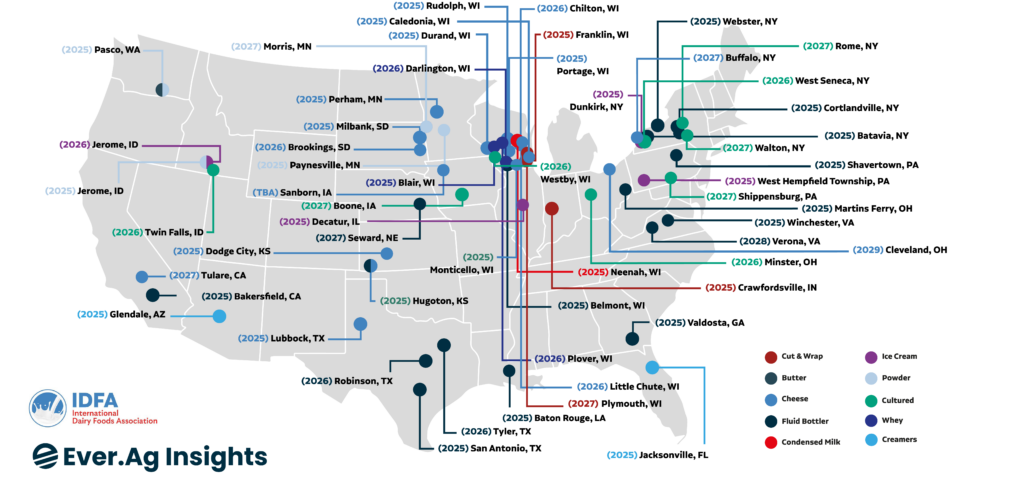
One of the clearest signals from the forum was that capital investment across processing and manufacturing remains strong. Industry leaders described the sector as being in the middle of a significant investment cycle, with projects driven by facility expansion, equipment upgrades, and capacity growth.

That demand is translating into real dollars. Dairy processors alone are expected to invest approximately $11 billion in new processing capacity over the next three years, placing dairy at the top of food and beverage investment activity.¹

The takeaway: the industry isn’t pulling back, but leaders are aligning capital more carefully with long-term objectives tied to efficiency, resilience, and measurable returns.

2. Technology and Efficiency Are Driving Capital Decisions

Another recurring theme was how investment priorities are evolving. Equipment purchases today are less about replacement and more about performance.

Automation, data-driven systems, and predictive technologies were repeatedly cited as tools food and beverage companies are using to:

  • Improve uptime
  • Control operating costs
  • Increase consistency

Capital investment plans also reflect structural shifts reshaping the dairy industry, including consolidation, productivity gains, and the push to do more with fewer resources. That mindset is resonating with lenders. In discussions about financing, operational discipline stood out as a key differentiator.

Manufacturers were described as some of the most disciplined producers and operators — even amid broader market volatility.² This means lenders aren’t only evaluating what equipment is being financed. They’re evaluating how that equipment supports the organization’s broader operational strategy.

3. Long-Term Planning Outweighs Short-Term Noise

While market sentiment across agriculture has shifted, lenders repeatedly emphasized a long-term view of food and beverage manufacturing. Near-term volatility matters, but it is not outweighing durable capital strategies supported by data and execution history.

As a result, food and beverage leaders can no longer assume that strong performance alone will speak for itself. Clear, data-backed narratives around capital investment, efficiency gains, and long-term planning are becoming essential to standing out in a more selective capital environment.

What This Means for Equipment Finance

The discussions at the 2026 Dairy Forum reinforced several practical considerations for the food and beverage industry:

  • Predictability matters. Fixed-rate financing can help manage long-term costs in an uncertain rate environment.
  • Liquidity matters. Leasing structures can preserve cash while supporting modernization and automation.
  • Industry focus matters. Financing experts who understand food and beverage production cycles can better align structures with operational realities.

When aligned correctly, equipment financing becomes more than a funding mechanism—it becomes a strategic lever. The broader message was not caution, but clarity. Food and beverage leaders are investing, but they are doing so with sharper focus on outcomes, resilience, and long-term competitiveness.

The opportunity lies in pairing thoughtful capital planning with financing strategies that support growth without sacrificing flexibility. In today’s environment, how you finance equipment can be just as important as the equipment itself.

Interested in learning more about equipment financing? Connect with us today.

Explore More Insights

7 Signs It’s Time to Automate

Tax-Efficient Capital Planning Under OBBBA

The east side of the US Capitol in the early morning. Senate Chamber in the foreground.

How to Make the Most of Equipment Financing: Understanding the Benefits & How Business Structure Plays a Role

Group of colleagues collaborating at table